

Urgent!
The Government Is Proposing to Strip Specialist Assistive Technology from Disabled Students.
We Need Your Help to Stop It.
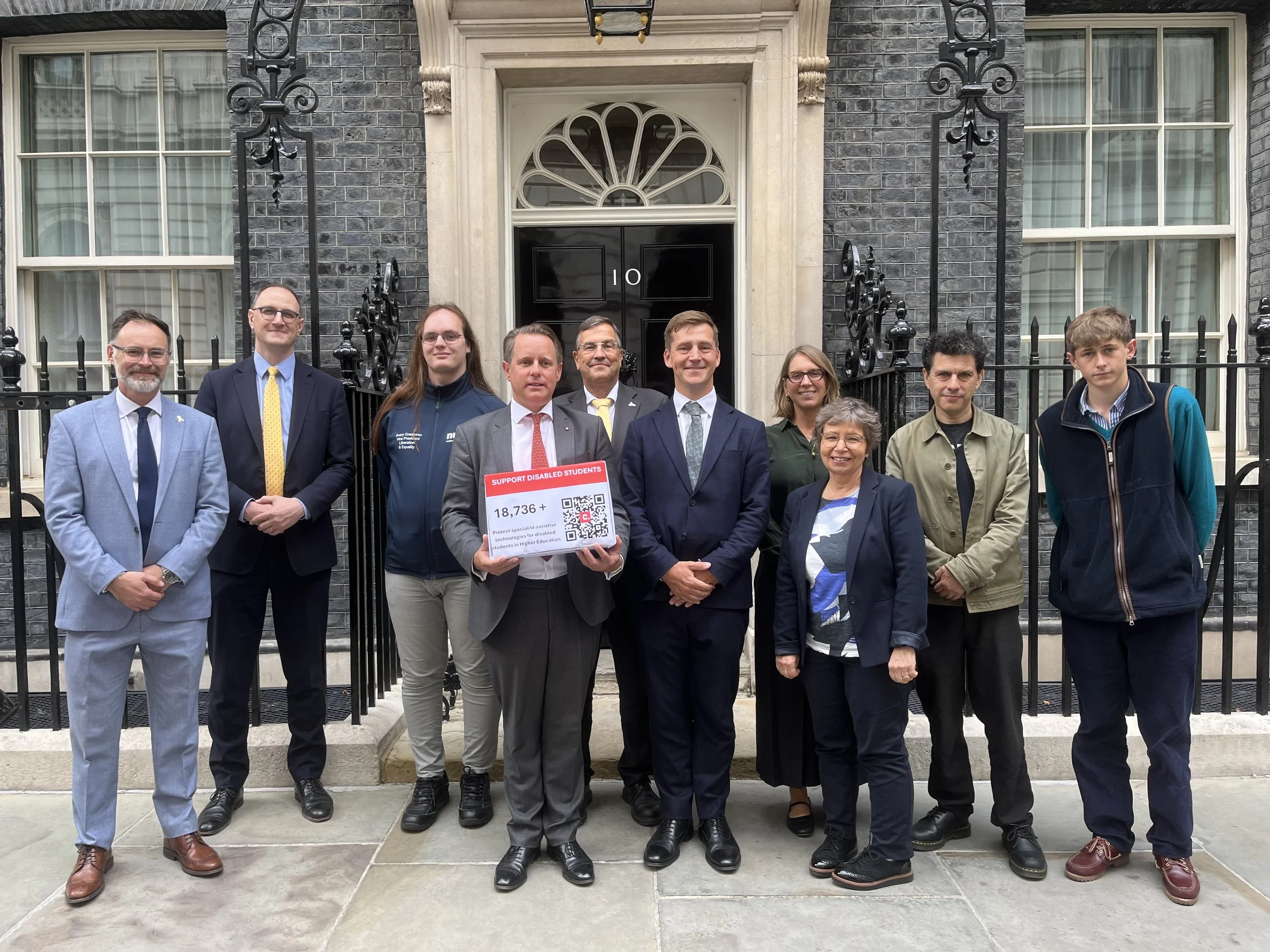
BATA Chairman Jack Churchill presented the petition to 10 Downing Street in September 2026, alongside MPs, NUS Representatives and students.
What Can You Do?
Read the BATA Response
BATA has produced a comprehensive, evidence-based response template to the consultation drawing on peer-reviewed research, the direct experience of disabled students, and the professional expertise of needs assessors and AT practitioners. Read it, use it, share it, and adapt it for your own submission.
Sign the Petition
The petition is ongoing! Add your name to it, calling on the government to withdraw these proposals and protect specialist assistive technology funding for disabled students.
What’s happening and why it matters
The Department for Education has launched a consultation proposing to remove DSA funding for specialist assistive software across almost every software category for disabled students in higher education. This includes text-to-speech, speech-to-text, mind mapping, composition tools, research software, note-taking, time and task management, and more.
The proposal would replace individually assessed, clinically recommended specialist tools with free, general-purpose alternatives on the grounds that they provide equivalent functionality.
They do not.
Over 88,000 students rely on DSA-funded assistive technology to access higher education. This proposal puts every one of them at risk.
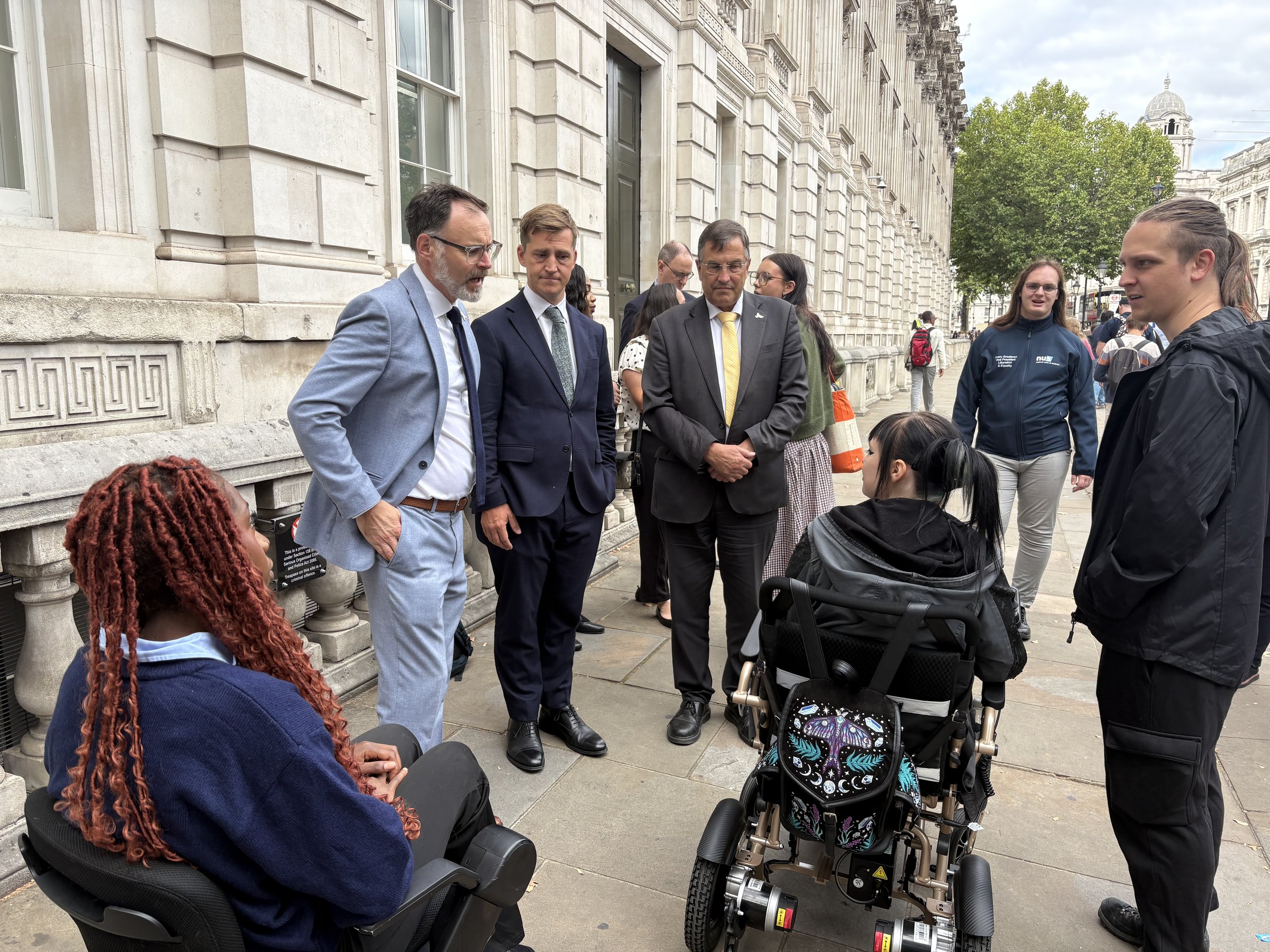
Students meet with MPs outside Parliament to discuss the proposed DSA funding cuts.
These are not software preferences. For many disabled students, specialist assistive technology is the difference between participating in higher education and being unable to do so at all. A DfE-commissioned study found that only 23% of DSA recipients felt confident they would pass their course without their DSA support. 59% said they would not.
The proposals are built on a flawed and factually inaccurate evidence base. The consultation document miscategorises software products, lists tools that no longer exist, and conflates free general-purpose tools with purpose-built specialist software that has been individually assessed, professionally recommended, and clinically configured for a specific student's needs. These are not equivalent, and the research evidence is unambiguous that the difference matters.
The proposals also directly contradict the government's own Get Britain Working White Paper, which committed £240 million to supporting disabled people into employment, and the SEND reform agenda, which has committed to a generational overhaul of support for neurodivergent children and young people. You cannot invest in getting disabled people into work while dismantling the educational support that makes their degrees, and their careers, possible.
Please share this page with your colleagues, networks, students, and anyone who cares about disabled people's right to access education on equal terms.
The window to act is closing. Every voice matters.
Let’s Work Together
Keep up to date on on our LinkedIn and YouTube Channel
Message us directly